
Math that is still there two weeks later.
Small group math for grades 2 to 11 in Glenview. We close the gaps, teach the method, then check that the learning actually held.
An in person assessment with Bayar. You leave knowing where your child stands, what is missing underneath, and what we would work on first.


Start where your child actually is.
Where most families start
“My child is doing fine, but I want them in the accelerated class.”
Accelerated and Honors Track
The school says your child is doing fine. Fine means keeping up with the class. You already know your child can do more than keep up. That is the gap we work in: ahead of what the school is teaching, and older material kept sharp instead of fading after the unit test.
“My child is falling behind and I do not know where it started.”
Catch Up and Close the Gaps
We find the gap underneath the gap. A student failing at fractions is often failing at division from two years earlier. We work backward until the floor is solid, then move forward.
“My child is bored and wants a real challenge.”
Competition Math
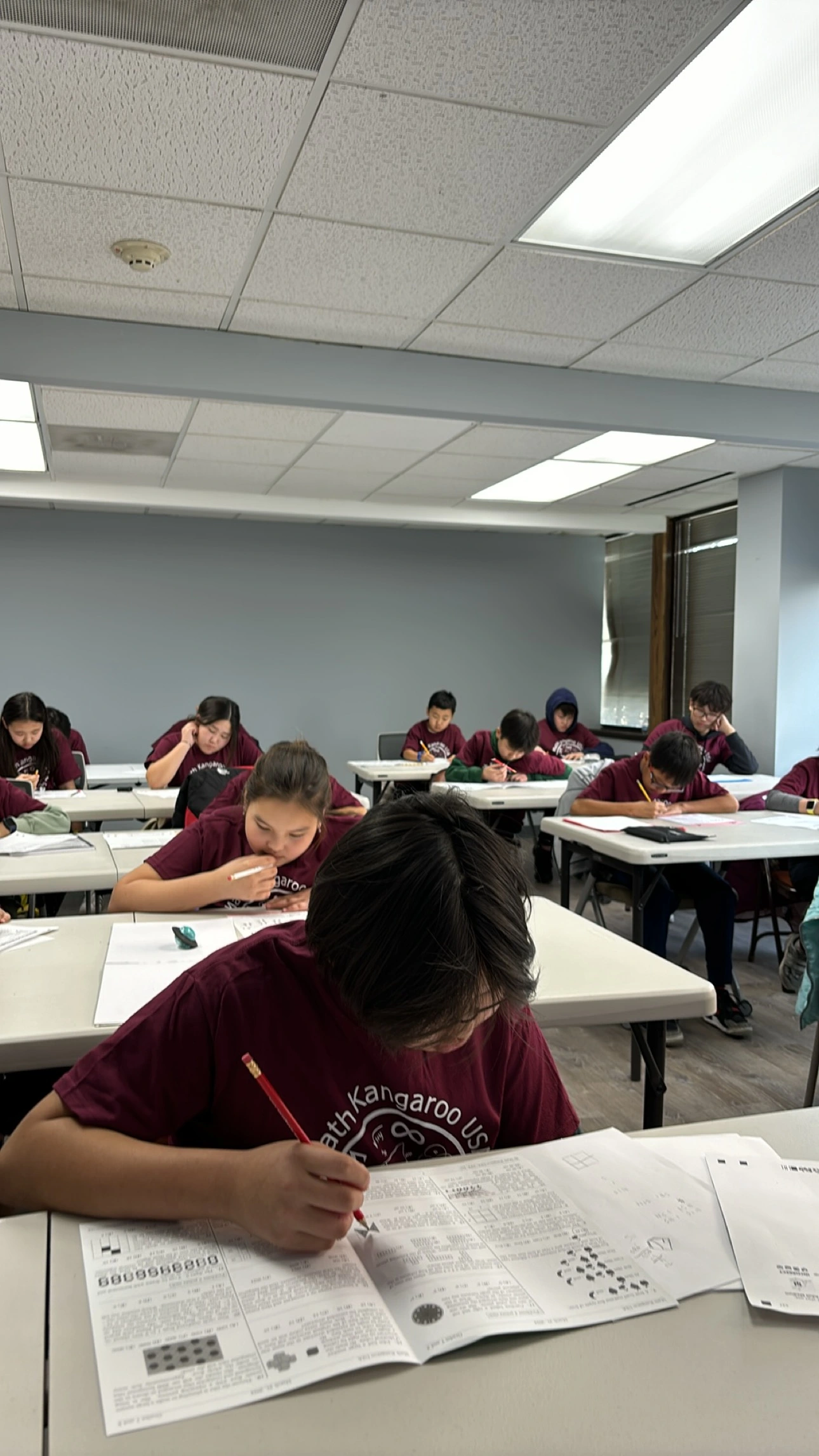
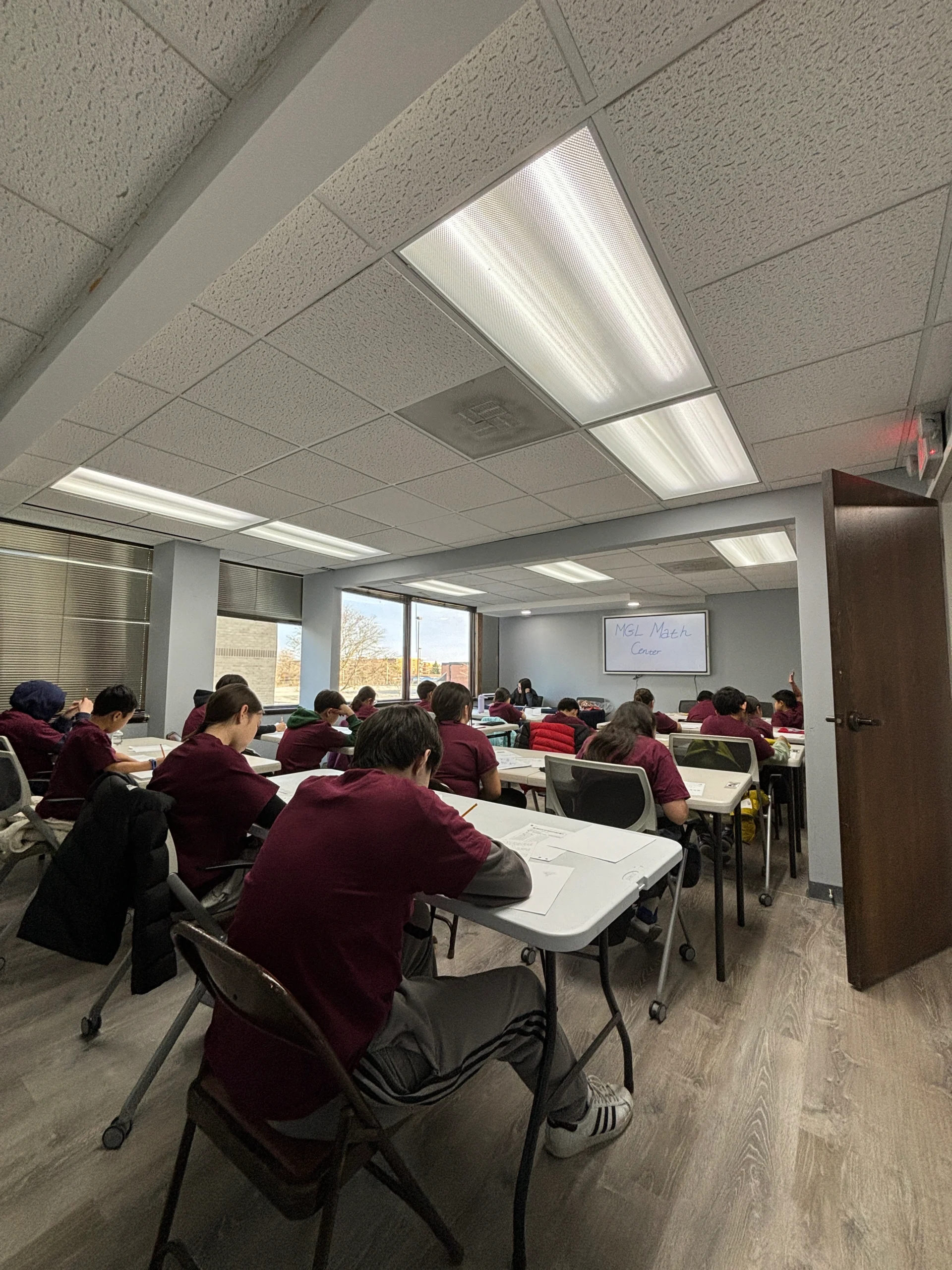
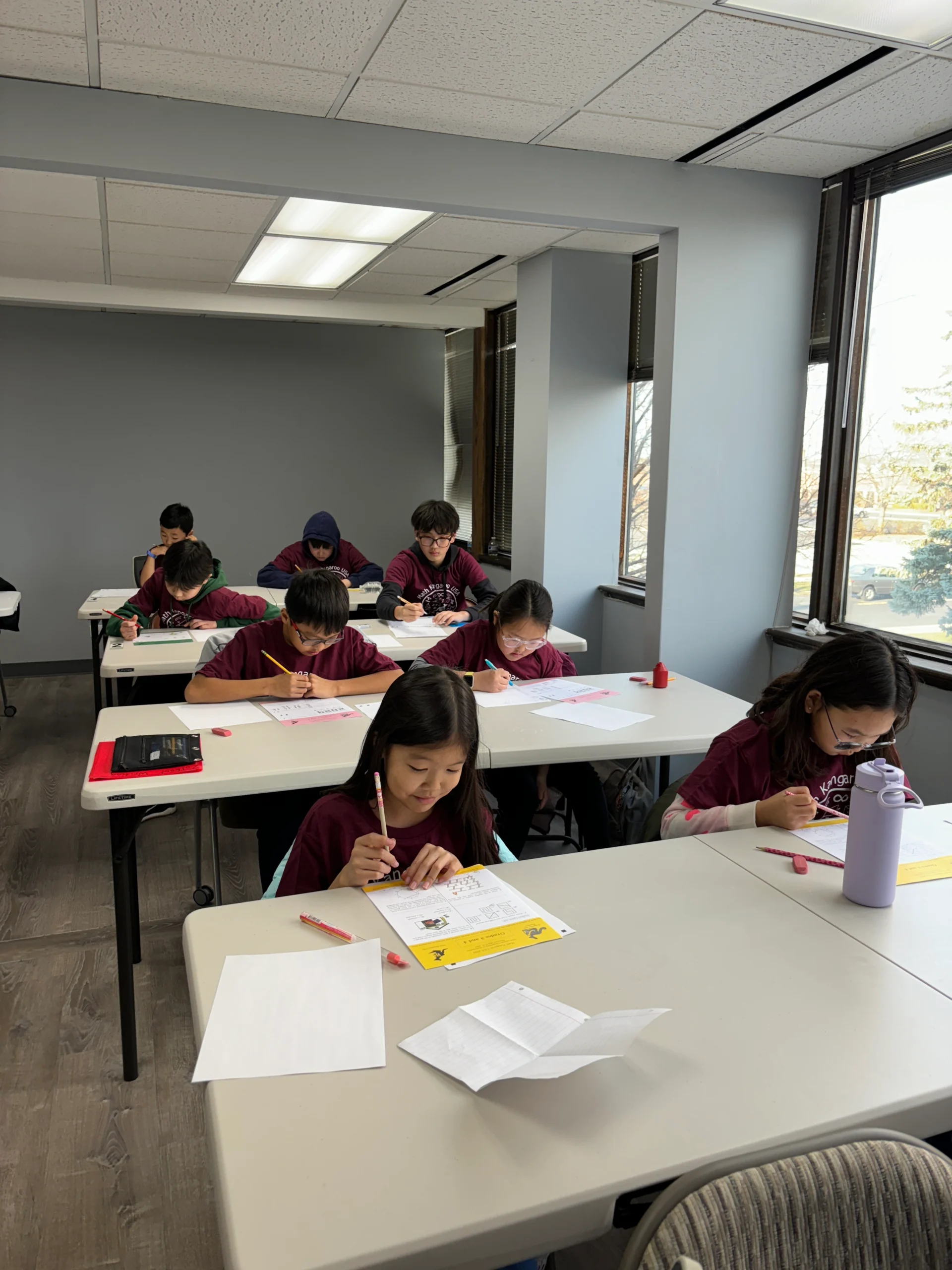
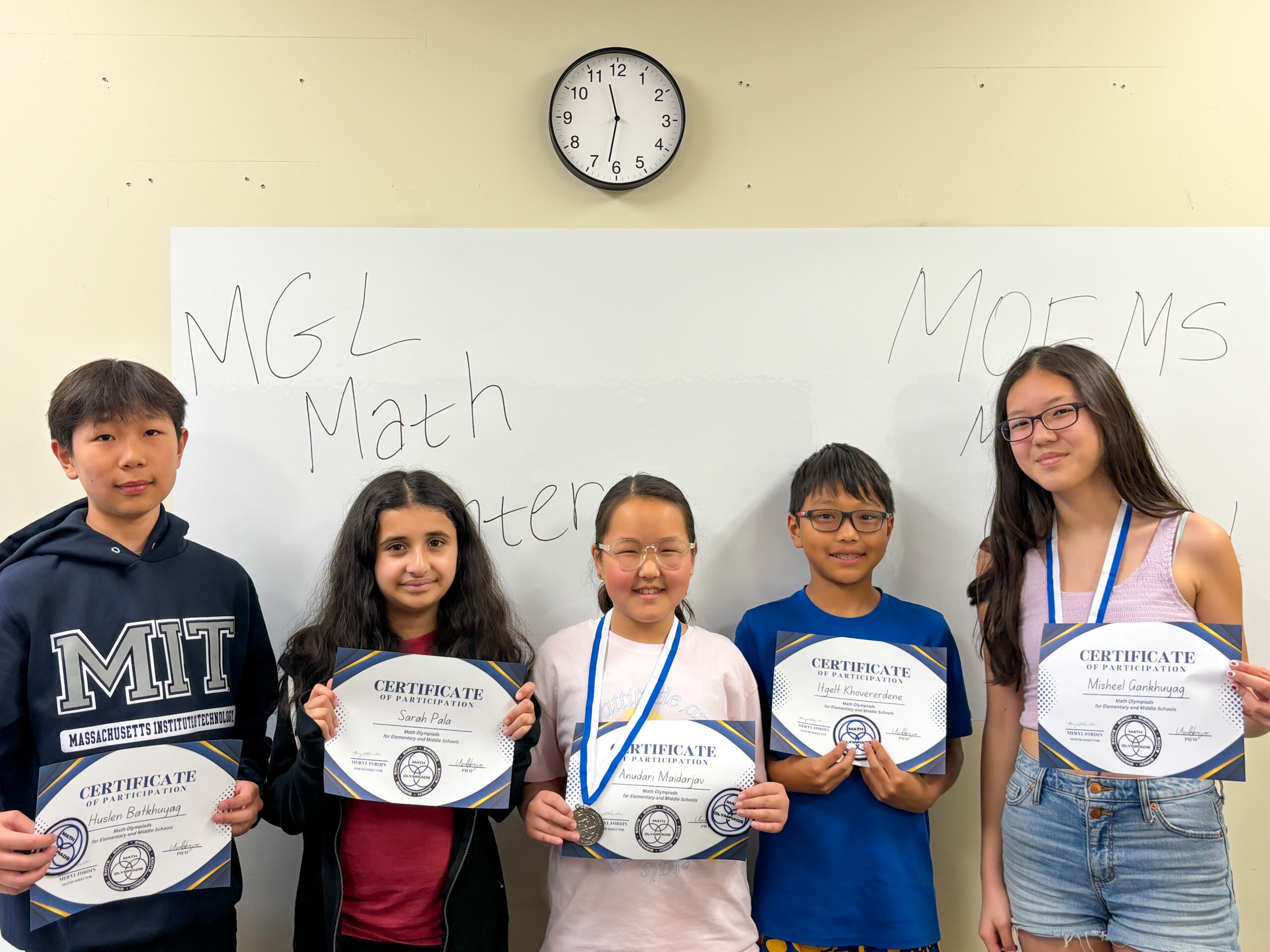
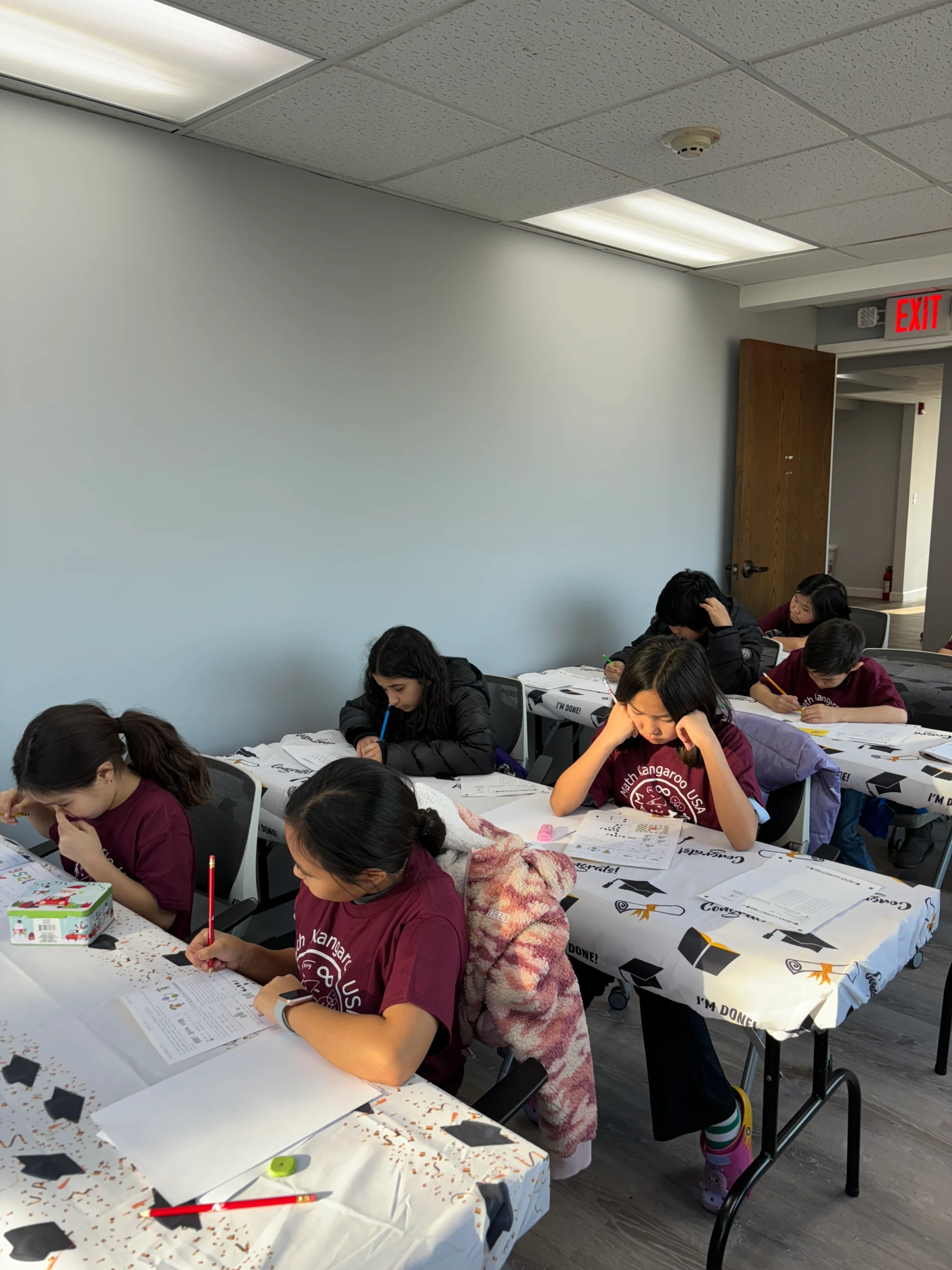
MOEMS, Math Kangaroo, and AMC 8/10. Problems that do not look like anything in the textbook, for students who have run out of difficulty at school.
Tuition and schedules are on the pricing page. Not sure which fits? Book the checkup and we will tell you.
What actually happens in sixty minutes.
Every hour is built from the same four pieces. Which ones get the most time depends on what your child walks in with.
Two minutes to switch on.
Most sessions opens with a puzzle or a short focus exercise. It is a small thing that ends the transition from school, phone, and car ride, and it means nobody spends the first ten minutes warming up.
Recall from last time.
We regularly check what stuck from previous weeks, closed notebooks. If something did not stick, we find out in the first ten minutes instead of 3 months later.
Work the mistakes, not just the homework.
We go through what they got wrong and why. A student who finishes every assignment and a student who understands every assignment are two different situations, so we track completion and accuracy separately. Fixing the error is the lesson.
Move forward.
When recall and corrections are clean, we teach the next thing in their plan and they work on it independently while the tutor circulates.
Everything from the hour is logged the same day: skills covered, what was recalled, homework completion, accuracy, focus. That is what becomes your monthly report.
We teach the math. We also teach how to hold on to it.
Most students study by rereading their notes until it feels familiar. Familiar is not the same as known, and that is where the three hours on Sunday disappear to. We work differently.
The mistake is the lesson
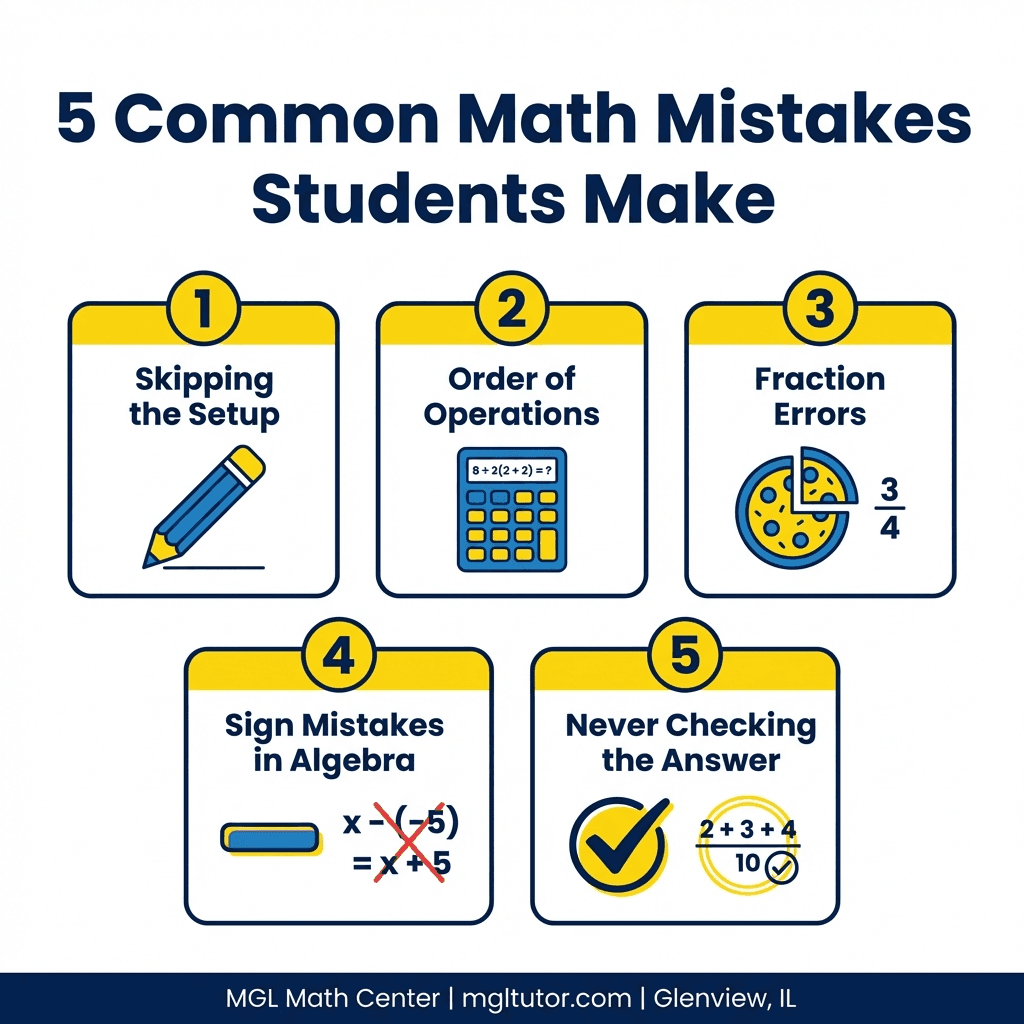
Most students look at a wrong answer, see the right one, and move on. Almost nothing changes. We go the other way and work out why it went wrong, because a slip in the arithmetic and a hole in the concept look identical on the page and need completely different fixes.
Practice that comes back and gets mixed up
A topic is not finished when the unit ends. It comes back later, on purpose, when it has started to fade. Problem sets mix types instead of drilling one. It feels harder in the room. It holds up much better on the test.
Easy math practice is the problem
When practice feels smooth, almost nothing is being stored. The feeling of fluency comes from the material being in front of you, not from knowing it. So we make practice harder on purpose. Students do worse in the room and better on the test, every time.
You get the data, not just a feeling.
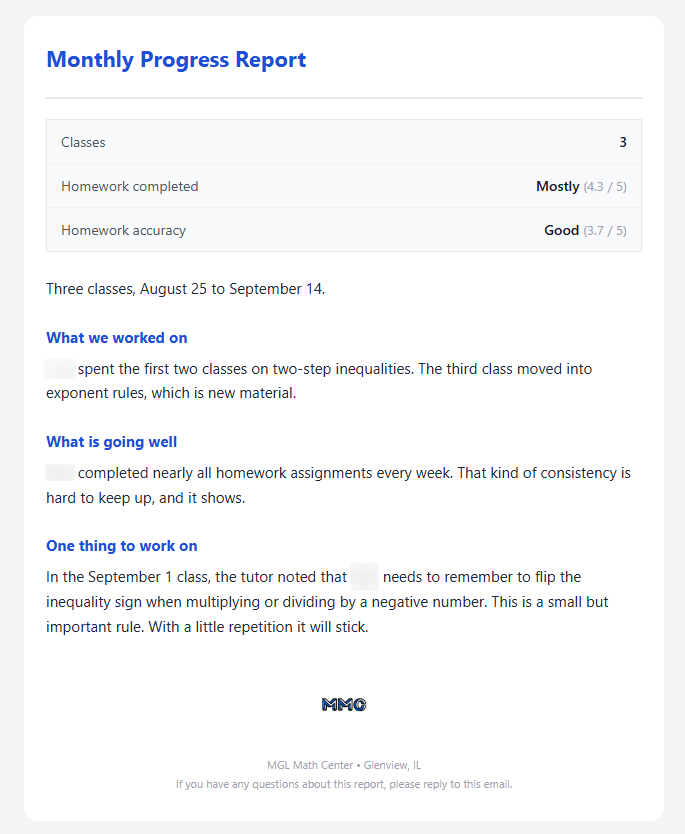
Every session is recorded the day it happens. Once a month, that turns into a report in your inbox automatically. No asking, no waiting for conferences.
- Skills covered and skills still weak
- What was recalled from previous weeks without notes
- Homework completion and accuracy, tracked separately
- Focus during the session
- Attendance
When we tell you your child improved, we can show you which week it happened.
The part that is not math.
A student can have the right method and still lose to the conditions around them. Six hours of sleep, a phone face up on the desk, and no plan for what to do when the work gets boring will undo good technique every time. This is the part most tutoring never touches, because it happens at home rather than in the classroom.
We have spent the last few years reading the research on it seriously, and building it into how we coach: sleep and its effect on memory, separating the phone from the study hour, designing a space where work is the easiest available option, and what to do at the exact moment a student wants to quit.
This runs as a small coaching group alongside our regular programs, and it shapes how every session at MMC is taught.
Free for parents
The Home Setup
One page, plain language, no lecture. What the research actually supports about sleep, phones, and the hour before bed, and what to change first if you can only change one thing.
Who is teaching your child
I am Bayar. I competed at the national level in math and trained for the International Math Olympiad, and I have spent ten years teaching students in Glenview. I started MMC because most math help I saw was a student copying a method they would forget by the next unit. I am more interested in what they can still do a month later.
OUR STUDENTS’ STORIES














We’d Love To Hear From You
CONTACT US
Find Us Here
4350 Di Paolo Center, St H, Glenview, IL, 60025
Working Hours
Mon-Fri : 4pm – 8pm
Saturday: 11am – 4pm